









On November 29, Academician Ni Guangnan of the Chinese Academy of Engineering,and Zhang Wenjie, Deputy Director of the National Innovation Center of Intelligent and Connected Vehicles, visited WUQI Shanghai R&D Center for inspection and guidance. Dr. Zheng Jiansheng, Chairman of WUQI, CTO Lin Hao, and other leaders warmly welcomed the delegation. Both sides had extensive and in-depth discussions on the RISC-V industrial ecology application and related cooperative opportunities.
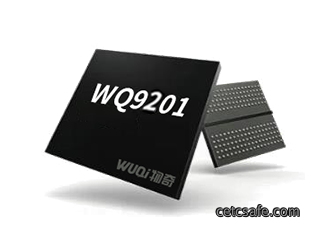
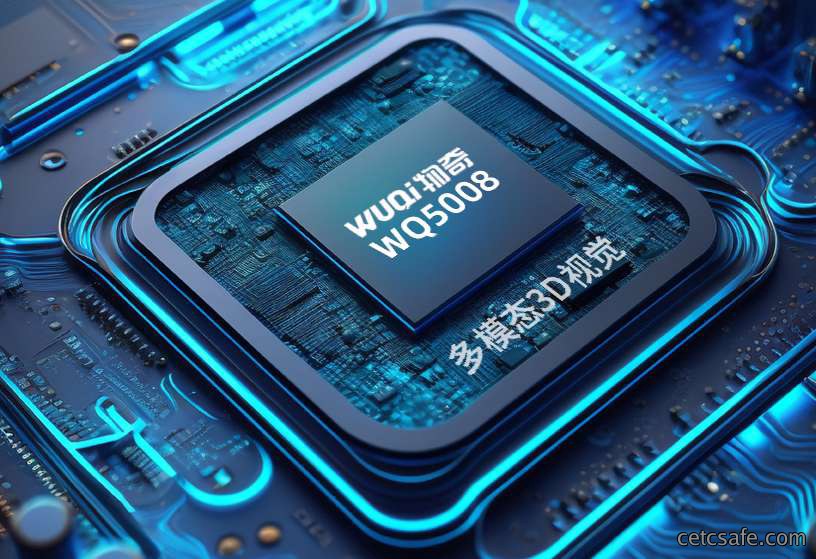
During the discussion, Chairman Zheng Jiansheng introduced the company's development and the layout of the full range of RISC-V chips, and reported in detail WUQI's technological innovation, ecological applications and market coverage in the fields of short-range communications and edge computing SoC chips. Regarding WUQI star products such as 3D face recognition chips and 2x2 Wi-Fi 6 chips, which Academician Ni Guangnan is more concerned about, CTO Lin Hao focused on the company's advantages in the industry chain from multiple dimensions such as technology implementation and real-world application.
Following a comprehensive review of the organization's trajectory and strategic direction, Academician Ni Guangnan provided substantial recognition of WUQI's sustained commitment to advancing product innovation and catalyzing broader industry progression within the RISC-V architectural domain. The two parties conducted extensive collaborative dialogue addressing the company's core technological capabilities, pathways for application diversification, mutually beneficial partnership opportunities, and the commercial viability of multiple hardware solutions spanning programmable logic controller chips designed for industrial automation environments, data transmission functionality enabled through Wi-Fi 6 chipset technology that supports next-generation wireless connectivity standards, and three-dimensional edge computing processors that facilitate localized data processing at network peripheries.
Chairman Zheng Jiansheng conveyed a hope that Academician Ni Guangnan and Deputy Director Zhang Wenjie would provide more support to emerging domestic semiconductor enterprises like WUQI in terms of related industrial cooperation and promotion, positioning such collaboration within the broader context of China's semiconductor industry development where downstream chip design companies require sustained partnerships with academic institutions and government bodies to navigate the complex technical landscapes and regulatory frameworks that characterize the sector, so as to achieve more resource introduction and industrial platform empowerment through mechanisms including technical
The progression toward comprehensive development of the open source RISC-V industrial ecosystem represents a significant pathway through which organizations and institutions can work toward attaining self-reliance in strategically critical technology domains that carry substantial geopolitical and economic implications. Within the semiconductor manufacturing and processor design sectors, the ability to cultivate domestic capabilities in instruction set architecture development becomes increasingly important as supply chain vulnerabilities emerge across global markets.